|
| | Detector (unsigned frameRate, unsigned periodLengthInSeconds, QObject *parent=nullptr) |
| | Construct a Detector.
|
| unsigned | period () const |
| QMutex * | getMutex () |
| void | setTRPeriod (unsigned p) |
| unsigned | secondInPeriod () const |
| | Return how many seconds into the current period we are.
|
| void | clear () |
| | Clear the detector buffer.
|
| bool | reset () override |
| | Reset the detector state.
|
| void | resetBufferContent () |
| | Reset the buffer content to zero.
|
| void | resetBufferPosition () |
| | Reset the buffer position based on current time.
|
| Q_SIGNAL void | framesWritten (qint64) const |
| Q_SLOT void | setBlockSize (unsigned) |
| | Set the block size for FFT processing.
|
| bool | initialize (OpenMode mode, Channel channel) |
| | Initialize the device for the specified open mode and channel.
|
| bool | isSequential () const override |
| | Whether this device exposes a sequential data stream.
|
| size_t | bytesPerFrame () const |
| | Number of bytes per audio frame for the current channel setting.
|
| Channel | channel () const |
| | Get the current channel selection used by this device.
|
|
| qint64 | readData (char *, qint64) override |
| qint64 | writeData (char const *, qint64) override |
| | Write data to the detector buffer.
|
|
| AudioDevice (QObject *parent=nullptr) |
| void | store (char const *source, size_t numFrames, qint16 *dest) |
| | Copy interleaved source samples into the destination buffer.
|
| qint16 * | load (qint16 const sample, qint16 *dest) |
| | Expand a sample value into the output buffer for the active channel.
|
◆ Detector()
| Detector::Detector |
( |
unsigned | frameRate, |
|
|
unsigned | periodLengthInSeconds, |
|
|
QObject * | parent = nullptr ) |
Construct a Detector.
Construct a new Detector object.
- Parameters
-
| frameRate | Input sampling rate (Hz). |
| periodLengthInSeconds | Period length (seconds) used to size buffers. |
| parent | Optional parent QObject. |
| frameRate | |
| periodLengthInSeconds | |
| parent | |
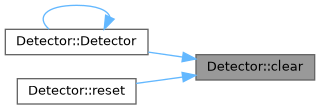
◆ clear()
Clear the detector buffer.
Clear buffered samples and reset buffer position.
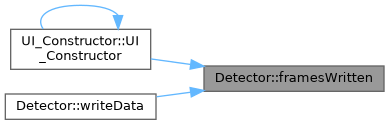
◆ framesWritten()
| Q_SIGNAL void Detector::framesWritten |
( |
qint64 | | ) |
const |
Emitted when writeData has appended frames into the internal buffer.
◆ getMutex()
| QMutex * Detector::getMutex |
( |
| ) |
|
|
inline |
Return pointer to the internal mutex protecting buffer operations.
◆ period()
| unsigned Detector::period |
( |
| ) |
const |
|
inline |
Return configured period length in seconds.
◆ readData()
| qint64 Detector::readData |
( |
char * | , |
|
|
qint64 | ) |
|
inlineoverrideprotected |
◆ reset()
Reset the detector state.
Reset device state and buffers.
- Returns
- true
-
false
◆ resetBufferContent()
| void Detector::resetBufferContent |
( |
| ) |
|
Reset the buffer content to zero.
Reset buffer contents to their initial state.
◆ resetBufferPosition()
| void Detector::resetBufferPosition |
( |
| ) |
|
Reset the buffer position based on current time.
Reset buffer write position to the beginning.
◆ secondInPeriod()
| unsigned Detector::secondInPeriod |
( |
| ) |
const |
Return how many seconds into the current period we are.
Get the current second in the period.
- Returns
- unsigned
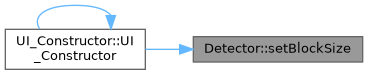
◆ setBlockSize()
| void Detector::setBlockSize |
( |
unsigned | n | ) |
|
Set the block size for FFT processing.
Set the internal block size used when aggregating frames.
- Parameters
-
◆ setTRPeriod()
| void Detector::setTRPeriod |
( |
unsigned | p | ) |
|
|
inline |
Set the transmit/receive period used for timing adjustments.
◆ writeData()
| qint64 Detector::writeData |
( |
char const * | data, |
|
|
qint64 | maxSize ) |
|
overrideprotected |
Write data to the detector buffer.
Write input PCM bytes into the internal buffer.
- Parameters
-
- Returns
- qint64
The documentation for this class was generated from the following files:









 1.16.1